
Four Taoist Paradoxes
Tao Te Ching: Chapter 18

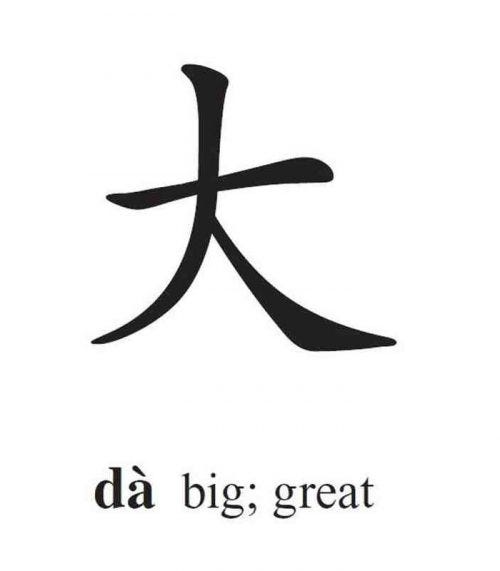
So far as I can remember, there has heretofore been no mention of Tao being “great” (大, dà) in the previous seventeen chapters of the Tao Te Ching. And even here in Chapter 18, where we first hear of “Great Tao,” the concept is not clearly defined. Rather, it is referred to in passing as a series of Taoist paradoxes is enumerated. We shall have to wait and see if later chapters expound further upon this notion of 大道. In the meantime, here are Laozi’s paradoxical aphorisms, which have an almost Blakean quality:
The Translation
When Great Tao is abandoned,
There is humanity and justice.

When wisdom and cleverness emerge,
There is great falsehood.

When the six relations are not harmonious,
There is filial piety.

When the country falls into chaos,
There are loyal ministers.
The Original
Wang Bi’s original prose version:
大道廢,有仁義;智慧出,有大偽;六親不和,有孝慈;國家昏亂,有忠臣。
Our poetic reformatting:
大道廢,
有仁義;

智慧出,
有大偽;

六親不和,
有孝慈;

國家昏亂,
有忠臣。
Terminology
仁 (rén) - here translated as “humanity”; appeared in Chapters 5 and 8 in its adjectival form
智 (zhì) - “wisdom,” “knowledge”; the character also appears, interestingly enough, in Dr. Hong’s given name (Zhi-Ping); the related verb 知 (zhī) appeared in Chapters 2, 3, 4, 14, 16, and 17, where it was translated as “know”
親 (qīn) - “dear,” “intimate,” “blood relation”
和 (hé) - “harmonious”; no previous appearances of this term have been found
國 (guó) - first appeared in Chapter 10, where it was translated as “country”; here paired with 家 (jiā), meaning “home,” in the phrase 國家 (guójiā), which is also translated as “country”
Notes
If there is such a thing as Great Tao (大道), is there not also a corresponding Small Tao (小道)? One thinks of the distinction between the Greater and Lesser Vehicles of Buddhism (Mahayana and Hinayana).
Derek Lin clarifies that the “six relations” are parent, child, older sibling, younger sibling, husband, and wife.