
Non-Action's Benefit
Tao Te Ching: Chapter 43

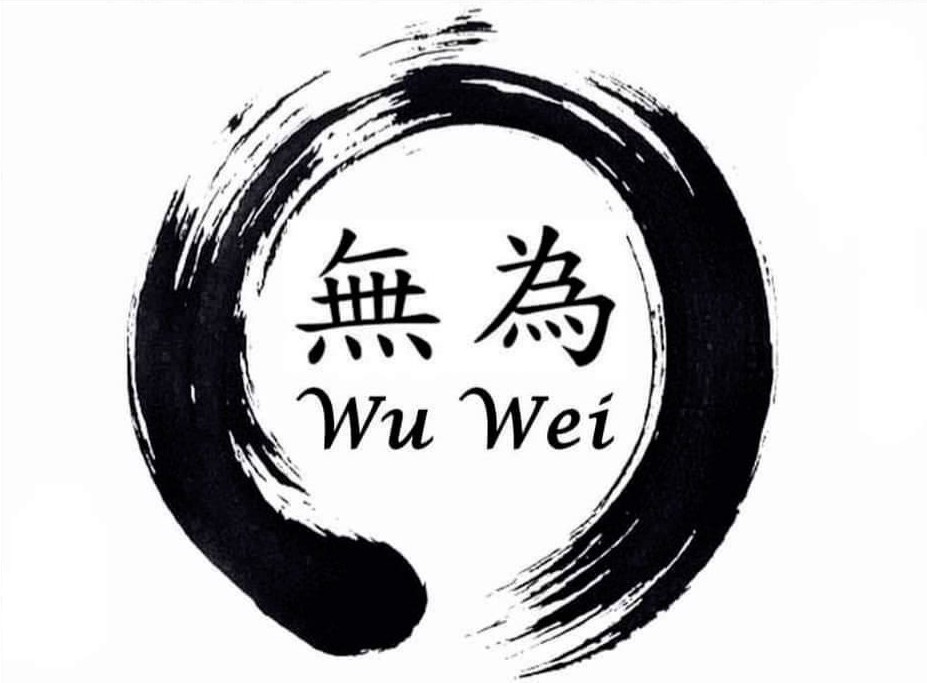
無為 (wúwéi) was first mentioned in Chapter 2, where it was translated as “doing nothing.” It appeared again in Chapter 3, where it was translated as “without doing,” and Chapter 10, where it was translated as “without action.” Here in Chapter 43, Dr. Hong and I have opted to translate 無為 with the abstract noun “Non-Action.” This pairs nicely with “Non-Existence,” our translation of 無有 (wú yǒu), which first appeared in Chapter 40.
The Translation
The softest thing under Heaven
Runs roughshod over the hardest thing under Heaven.

Non-Existence enters where there is no opening.
I therefore know Non-Action's existential benefit.

Wordless teaching,
Non-Action's benefit:
Under Heaven it is rarely attained.
The Original
Wang Bi’s original prose:
天下之至柔,馳騁天下之至堅。無有入無間,吾是以知無為之有益。不言之教,無為之益,天下希及之。
Our poetic reformatting:
天下之至柔,
馳騁天下之至堅。

無有入無間,
吾是以知無為之有益。

不言之教,
無為之益,
天下希及之。
Terminology
馳騁 (chíchěng) - both of these characters feature the radical for “horse”; the phrase is here translated as “runs roughshod over,” but we were tempted to substitute “tramples underfoot”
益 (yì) - here translated as “benefit,” the word can also mean “profit” or “advantage”
教 (jiào) - last seen in Chapter 42, this word means “teaching,” “instruction,” “religion,” etc.
Notes
Regarding 馳騁, Derek Lin says: “I have translated the characters chi cheng as ‘override.’ This best represents the original meaning. The image evoked by these characters is a horseman riding a powerful, galloping steed. The rider cannot compare to the horse in terms of physical strength, but there is no question who is controlling whom. This is the perfect image for ‘the soft overcomes the hard.’”
Of Line 3 Lin says: “Water seeps into and dissolves rocks; electricity flows through a block of metal. Thus, the intangible Tao can permeate all things, even if they appear to be solid, without any cracks or openings.”