
Attaining the One
Tao Te Ching: Chapter 39

The unitary concept of Oneness has previously appeared in Chapter 10, Chapter 14, and Chapter 22 of the Tao Te Ching. Here in Chapter 39, Laozi begins by listing those entities which “attained the One” in the past. He then goes on to explain how acolytes of the present day might achieve Oneness themselves (after first warning of the dangers of failing to do so). It is generally understood that the Old Master is using “the One” as a synonym of “Tao.”
The Translation
Those who in ancient times attained the One:
Heaven attained the One and thus clarity.
Earth attained the One and thus tranquility.
Gods attained the One and thus divinity.
Valleys attained the One and thus fullness.
Ten Thousand Things attained the One and thus life.
Lords and Kings attained the One and thus established righteousness under Heaven.

Consequently, Heaven without clarity will be fearful of cracking.
Earth without tranquility will be fearful of erupting.
Gods without divinity will be fearful of dying.
Valleys without fullness will be fearful of exhaustion.
Ten Thousand Things without life will be fearful of extinction.
Lords and Kings without high nobility will be fearful of falling.

Thus, the Noble takes root in the Humble,
And the High finds its basis in the Low.
Therefore, Lords and Kings call themselves orphan, widow, unfruitful.
This is what we mean by taking root in the Humble, is it not?

Thus, the best honor is to be without honor.
Do not desire to be lustrous like jade, but dull like a stone.The Original
Wang Bi’s original prose:
昔之得一者:天得一以清;地得一以寧;神得一以靈;谷得一以盈;萬物得一以生;侯王得一以為天下貞。其致之,天無以清,將恐裂;地無以寧,將恐發;神無以靈,將恐歇;谷無以盈,將恐竭;萬物無以生,將恐滅;侯王無以貴高將恐蹶。故貴以賤為本,高以下為基。是以侯王自稱孤、寡、不穀。此非以賤為本耶?非乎?故致數譽無譽。不欲琭琭如玉,珞珞如石。
Our poetic reformatting:
昔之得一者:
天得一以清;
地得一以寧;
神得一以靈;
谷得一以盈;
萬物得一以生;
侯王得一以為天下貞。

其致之,天無以清,將恐裂;
地無以寧,將恐發;
神無以靈,將恐歇;
谷無以盈,將恐竭;
萬物無以生,將恐滅;
侯王無以貴高將恐蹶。

故貴以賤為本,
高以下為基。
是以侯王自稱孤、寡、不穀。
此非以賤為本耶?非乎?

故致數譽無譽。
不欲琭琭如玉,珞珞如石。
Terminology
貴 (guì) / 賤 (jiàn) - literally, “expensive” / “cheap”; here translated as “noble” / “humble”
譽 (yù) - here translated as “honor,” it can also mean “fame,” “glorification,” “reputation”; note that it is pronounced the same as 玉 (yù) below
玉 (yù) - “jade”; this word appeared previously in Chapter 9; note that it is pronounced the same as 譽 (yù) above
Notes
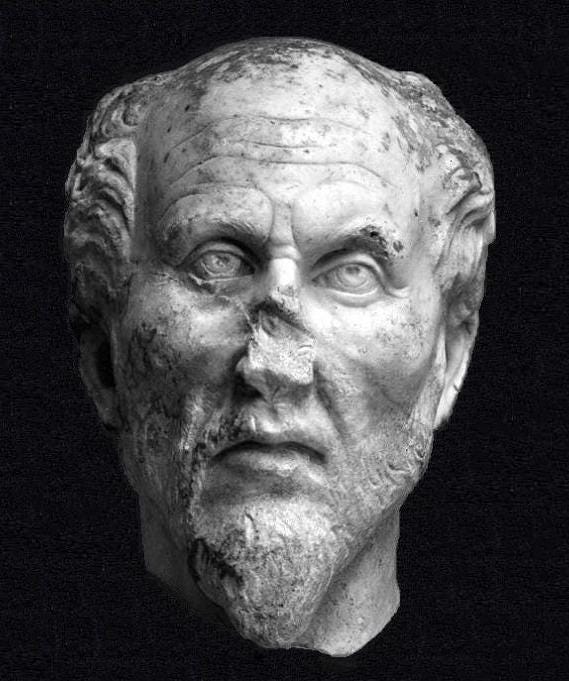
The Hellenistic Greek philosopher Plotinus, generally considered the father of Neoplatonism, seems to have had Taoist tendencies, as this quote from Volume IV of his Enneads indicates: “It is precisely because there is nothing within the One [τὸ ἕν] that all things are from it.”
Dr. Hong and I reconsidered our translation of the previous chapter and made significant edits. The original post has been updated to reflect these changes.