
Tao, Virtue, Failure
Tao Te Ching: Chapter 23

Chapter 23 of the Tao Te Ching features one of the best opening lines in the entire text. Reflection on Nature then segues into a meditation on Heaven and Earth, with a third element—Man—mentioned almost as an afterthought. There follows an excursus on the concepts of Tao, Virtue, and—somewhat surprisingly—Failure. Laozi concludes the chapter with a gnomic saying related to the matter of Trust.
The Translation
Rarely does Nature speak.
Thus, strong wind does not last all morning
And sudden rain does not last all day.

What causes this? Heaven and Earth.
Yet even Heaven and Earth cannot last forever.
Isn't that the condition of Man as well?

Thus, he whose concern is Tao is the same as Tao.
He whose concern is Virtue is the same as Virtue.
He whose concern is Failure is the same as Failure.

He who is the same as Tao Tao gladly accepts.
He who is the same as Virtue Virtue gladly accepts.
He who is the same as Failure Failure gladly accepts.

When Trust is insufficient, there is no trusting.
The Original
Wang Bi’s original prose version:
希言自然,故飄風不終朝,驟雨不終日。孰為此者?天地。天地尚不能久,而況於人乎?故從事於道者,同於道;德者,同於德;失者,同於失。同於道者,道亦樂得之;同於德者,德亦樂得之;同於失者,失亦樂得之。信不足焉,有不信焉。
Our poetic reformatting:
希言自然,
故飄風不終朝,
驟雨不終日。

孰為此者?天地。
天地尚不能久,
而況於人乎?
故從事於道者,同於道;
德者,同於德;
失者,同於失。

同於道者,道亦樂得之;
同於德者,德亦樂得之;
同於失者,失亦樂得之。

信不足焉,有不信焉。
Terminology
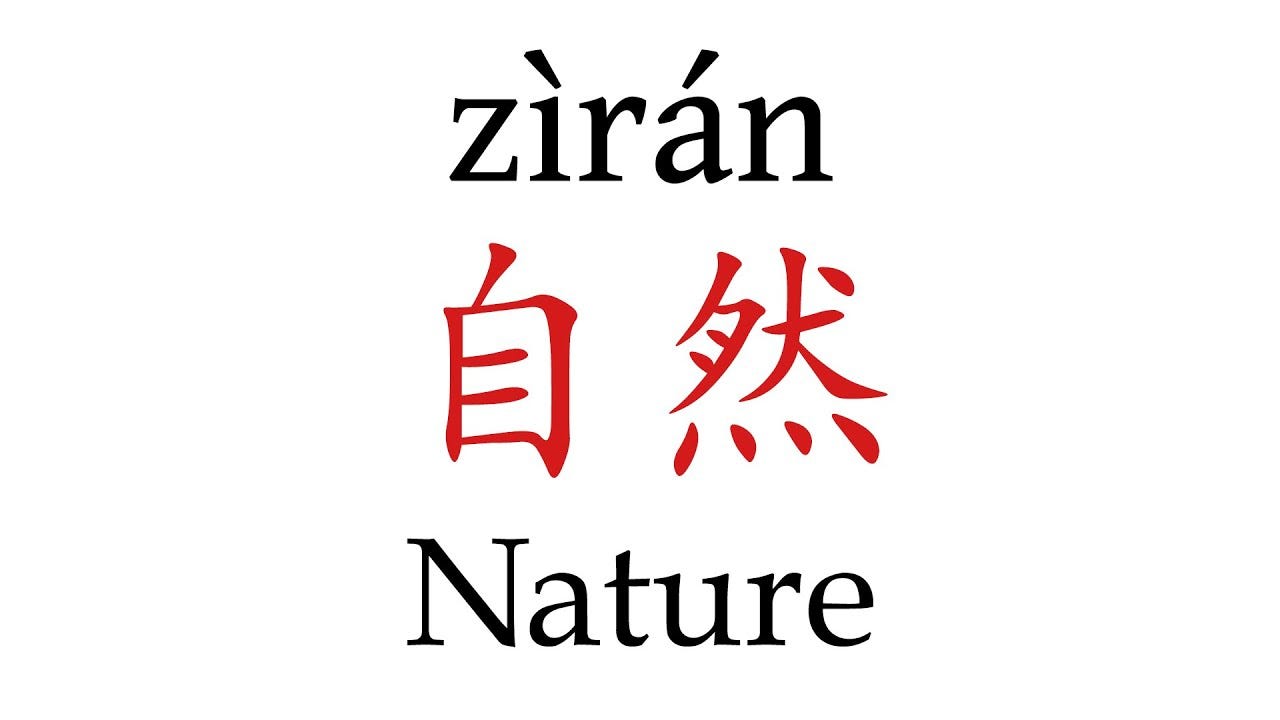
自然 (Zìrán) - “Nature” (as above), but also “natural,” “naturally,” “physical”; the term first appeared in Chapter 17
言 (yán) - “speak” (as above), but also “say,” “speech,” “word,” “character”
天地 (tiāndì, “Heaven and Earth”) should be very familiar by now. Likewise, 道 (Dào, “Tao”) and 德 (Dé, “Virtue”). But the association of 失 (Shī) with the latter two terms is most unexpected. As seen above, 失 may be translated as “Failure,” but it can also mean “Loss,” “Abandonment,” “Mistake,” “Mishap.”
信 (Xìn) - “Trust” (as above), but also “Faith,” “message,” “letter,” “believe”; not to be confused with 言
Notes
That brilliant first line could also be translated: “Of infrequent speech is Nature,” “Infrequent speech is natural,” “Nature doesn’t say much,” etc.
Would it be going too far to translate 失 as “Sin,” by analogy with the Greek New Testament ἁμαρτία (hamartia), which literally means “missing the mark”?