
Nothing Too Much
Tao Te Ching: Chapter 29

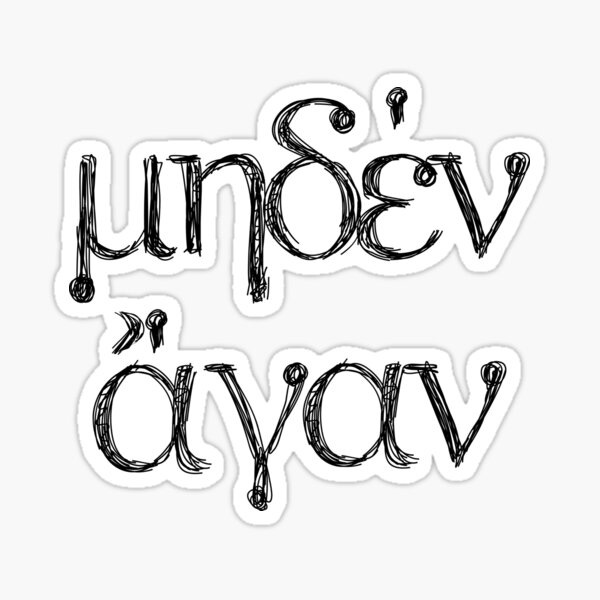
In Chapter 29 of the Tao Te Ching, Laozi warns against extremes, much as the oracle at Delphi admonished the ancient Greeks with the phrase Μηδὲν ἄγαν (“Nothing too much”). One learns to turn away from excess after observing the futile efforts of those who would micromanage or dominate things. When we attempt to control, the Old Master suggests, we lose control.
The Translation
Some want to seize what's under Heaven by controlling it,
But I see them as unsuccessful.

What's under Heaven is a magical device
That cannot be controlled.
Those controlling fail.
Those grasping lose.

Thus, things either lead or follow,
They either sigh or huff,
They are either weak or strong,
They either tolerate breakage or are utterly destroyed.

Therefore, the Sage rejects extremes,
He rejects extravagance,
He rejects arrogance.
The Original
Wang Bi’s original prose:
將欲取天下而為之,吾見其不得已。天下神器,不可為也,為者敗之,執者失之。故物或行或隨;或歔或吹;或強或羸;或挫或隳。是以聖人去甚,去奢,去泰。
Our poetic reformatting:
將欲取天下而為之,
吾見其不得已。

天下神器,
不可為也,
為者敗之,
執者失之。

故物或行或隨;
或歔或吹;
或強或羸;
或挫或隳。

是以聖人去甚,
去奢,
去泰。
Terminology
Following Derek Lin, we have translated 為 (wèi) as “control.” It can also mean “act,” “be,” “do,” “become,” “make,” etc.
神器 (shénqì), here translated as “magical device,” can also mean “sacred tool,” “superhuman weapon,” “divine instrument,” “godlike vessel.”
Notes
Aleister Crowley titled this chapter REFRAINING FROM ACTION.
Ursula K. Le Guin: “For Lao Tzu, ‘moderation in all things’ isn’t just a bit of safe, practical advice. To lose the sense of the sacredness of the world is a mortal loss. To injure our world by excesses of greed and ingenuity is to endanger our own sacredness.”