

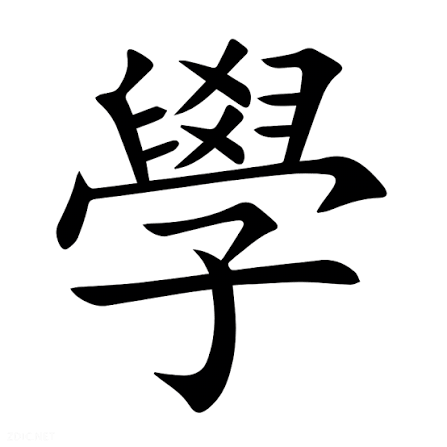
The Confucian notion of Learning (see above) is here contrasted with Tao. Laozi suggests that the accumulation of knowledge and the acquisition of formal education may actually hinder one’s ability to perceive the simplicity of true wisdom. Academic titles and degrees are poor substitutes for innate intelligence and common sense.
The Translation
Enact Learning daily to increase.
Enact Tao daily to decrease.

Decrease and again decrease
Until arriving at Non-Action.
In Non-Action, there is nothing not enacted.

Seize what's under Heaven by constant Non-Interference,
For when there is Interference,
It is not possible to seize what's under Heaven.
The Original
Wang Bi’s original prose:
為學日益,為道日損。損之又損,以至於無為。無為而無不為。取天下常以無事,及其有事,不足以取天下。
Our poetic reformatting:
為學日益,
為道日損。

損之又損,
以至於無為。
無為而無不為。

取天下常以無事,
及其有事,
不足以取天下。
Terminology
學 (Xué) - translated here as “Learning,” it can also mean “Study,” “Knowledge,” “College”; cf. the title of the Confucian classic 大學 or “Great Learning,” a phrase which in modern times also means “university”
益 (yì) - translated here as “increase,” it can also mean “benefit,” “profit,” “useful”; paradoxically presented in Chapter 48 as being of dubious value
損 (sǔn) - translated here as “decrease,” it can also mean “damage,” “harm,” “injure,” “lose”; paradoxically presented in Chapter 48 as a net positive
事 (Shì) - translated here as “Interference” (or as “Non-Interference” when coupled with privative 無), it can also mean “Involvement,” “Matter,” “Responsibility,” “Business,” “Thing,” “Trouble”; Ursual K. Le Guin translates it as “Fuss”
Notes
This chapter is being posted a few days late. Apologies for the delay.
I was tempted to translate “seize what’s under Heaven” as “conquer the world.”
Ursula K. Le Guin’s title for this chapter is “Unlearning.”